REVISTA INCLUSIONES – REVISTA DE HUMANIDADES Y CIENCIAS SOCIALES

ISSN 0719-4706
Volumen 12 Número 4
Octubre - Diciembre 2025
Páginas 1-20
https://doi.org/10.58210/ri3680
Mexican University Students’ Perception of Family Support According to Gender Identity - Volumen 12 Número 4 - Página —-
| |
ISSN 0719-4706 | |
Mexican University Students’ Perception of Family Support According to Gender Identity
/
La percepción del apoyo familiar según la identidad de género en estudiantes universitarios mexicanos
Javier López González
Universidad Veracruzana, México
https://orcid.org/0000-0003-2704-7944
Martha Lilia León Noris
Universidad Veracruzana, México
https://orcid.org/0000-0002-9833-9859
Martha Luna Martínez
Universidad Veracruzana, México
https://orcid.org/0009-0004-0289-683X
Manuela Cabrera Castillo
Universidad Veracruzana, México
https://orcid.org/0000-0002-3166-960X
Bernardo Sebastian Flores Prieto
Universidad Veracruzana, México
berflores@uv.mx
https://orcid.org/0000-0002-7795-0739
Fecha de Recepción: 8 de Agosto de 2025
Fecha de Aceptación: 5 de noviembre de 2025
Fecha de Publicación: 15 de diciembre de 2025
Financiamiento:
El presente estudio no contó con financiamiento externo.
Conflictos de interés:
Los autores declaran no presentar conflicto de interés.
Correspondencia:
Nombres y Apellidos: Bernardo Sebastian Flores Prieto
Correo electrónico: berflores@uv.mx
Dirección postal: Lomas del Estadio S/N, Col. Zona Universitaria C.P. 91000, Xalapa, Veracruz, México.
Licencia Creative Commons Atributtion Nom-Comercial 4.0 Unported (CC BY-NC 4.0) Licencia Internacional
Abstract: This study analyzes the influence of family dynamics and perceived affection on gender identity and emotional well-being among Mexican university students. A total of 19,151 undergraduate students participated through the application of the REVIVA 2022 instrument, which showed high consistency (Cronbach’s α = .909). Statistical analyses revealed significant associations between family coexistence, perceived love, and gender identity. LGBTIQ+ students reported less favorable family environments and lower levels of appreciation, underscoring emotional vulnerabilities and disparities in support systems. These findings highlight the role of the family as a primary agent of gender socialization and emphasize the need for inclusive policies and support programs that address gender diversity within educational and familial contexts.
Keywords: gender identity; family coexistence; higher education; LGBTIQ+; Mexico, emotional well-being.
Resumen: Este estudio analiza la influencia de la dinámica familiar y el afecto percibido en la identidad de género y el bienestar emocional en estudiantes universitarios mexicanos. Un total de 19,151 estudiantes de pregrado participaron mediante la aplicación del instrumento REVIVA 2022, el cual demostró alta consistencia (alfa de Cronbach = .909). Los análisis estadísticos revelaron asociaciones significativas entre la convivencia familiar, el amor percibido y la identidad de género. Los estudiantes LGBTIQ+ reportaron entornos familiares menos favorables y menores niveles de apreciación, evidenciando vulnerabilidades emocionales y disparidades en los sistemas de apoyo. Estos hallazgos destacan el papel de la familia como agente primario de socialización de género y subrayan la necesidad de políticas inclusivas y programas de apoyo que aborden la diversidad de género en contextos educativos y familiares.
Palabras claves: identidad de género; convivencia familiar; educación superior; LGBTIQ+; bienestar emocional.
Introduction
Family life constitutes a critical dimension in the emotional and social development of individuals, particularly during the university years when the complex task of shaping personal and social identity is underway. In this context, gender identity appears as a fundamental part that can influence the university student's perception of their sense of belonging and appreciation within the family.[1],[2]
Ongoing interaction with family creates a setting where the gender identities of young university students are formed and negotiated. However, this coexistence can also become a space of conflict and tension regarding the expression of gender identity. It is therefore crucial to recognize the significant influence that the family environment can have on how university students explore, understand, and express their gender identity.[3]
The sense of being valued within the family plays a crucial role in the emotional well-being and self-esteem of university students. Recent studies have shown that family support and acceptance are significant protective factors for the well-being of LGBTIQ+ youth in academic settings.[4] In contrast, lack of family support can increase students’ vulnerability to experiences of discrimination and psychosocial stress.[5],[6] A family–ecological lens situates gender identity development within nested systems, emphasizing how day-to-day family processes (microsystem) interface with wider cultural norms and policies (macrosystem). Evidence from family and ecological systems approaches shows that affirmation and support within the family are consequential for transgender and gender-diverse youth, shaping well-being and identity navigation in ways that generalize across sociocultural settings. This perspective justifies focusing on proximal family dynamics—coexistence quality and perceived affection—as key correlates of students’ gender identity and emotional adjustment.[7]
The minority stress framework proposes that distal stigma (e.g., prejudice, discrimination) and proximal processes (e.g., rejection expectations, concealment, internalized stigma) cumulatively undermine well-being in gender- and sexuality-diverse populations. Within this lens, the family functions as a proximal context that can buffer or amplify structural stressors. Evidence from the Family Acceptance Project shows that specific caregiver behaviors—consistent use of affirmed names/pronouns, explicit validation of identity, advocacy in school/health settings, and avoidance of “conditional acceptance”—are linked to better mental health and lower risk among LGBTIQ+ youth.[8]
Qualitative research with transgender youth highlights which parental behaviors are seen as supportive and which create barriers. Interviews from the Resilience and Transgender Youth study point out support factors like emotional validation of identity, consistent use of affirmed names and pronouns, active advocacy in hostile environments, and practical help with services or paperwork. Conversely, “conditional acceptance," over-monitoring, and dismissing one's identity are stressors that weaken perceived support.[9] This qualitative perspective helps explain why family coexistence and perceived affection can serve as either protective or risk factors for identity development among gender-diverse university students.
In university populations, new evidence indicates that family support and parent–child relationship quality are linked to fewer academic challenges among LGBTIQ+ students, even when peer support is not. These findings underscore the uniquely protective role of family relationships for academic functioning under stress, reinforcing our focus on family coexistence and perceived affection as policy-relevant targets in higher education.[10]
Addressing the relationship between gender and family is inherently complex. This topic requires contributions from psychology, anthropology, and sociology, as well as national and international policy frameworks. Notably, the 2030 Agenda identifies gender equality as a key goal for sustainable development.[11]
Furthermore, the most recent report from the Organization of American States[12], points out the urgent need to address the education crisis and to strengthen efforts aimed at promoting gender equality, to mention some aspects of the sustainable development goals that have been pending since 2015, which can be overcome with human resilience.
According to Muñiz and Flores[13], gender is a sociocultural construct that defines the relationship between femininity and masculinity, independent of biological factors.
Similarly, Facio [14] considers that these categories are based on the roles that each one plays in a dichotomy that represents stereotypes established by society.
As a primary socializing agent, the family plays a foundational role in the internalization of gender roles, values, and norms from early development. A systematic review conducted by Westwater et al. [15], which explored gender diversity in individuals under the age of eighteen, highlighted the critical role of the family system in supporting youth navigating diverse gender identities. The review consistently found that family acceptance and involvement were associated with improved mental health and overall well-being, while a lack of familial support was linked to increased psychological distress and adverse life outcomes. It is important to note, however, that the studies included in the review did not encompass populations from Latin America, showing a significant gap in literature.
In this sense, gender relations are shaped and mediated through social structures. In the Mexican cultural context, for example, traditional gender norms socialize girls to be obedient, dependent, and subordinate to boys, while the latter should be strong by demonstrating it with violence to resolve any conflict and be independent. Added to this is teaching in schools, religion, mass media, and, of course the family.[16]
In this sense, contemporary public policies adopt a gender perspective aimed at addressing gender inequalities. Men and women are no longer seen only as social groups defined by biological sex, but as social identities—thus acknowledging the ongoing structural inequalities. The recognition of diverse LGBTIQ+ identities has also become more prominent, with efforts focused on promoting equality and respect for all family structures.[17] [18]
Scott[19] points out that gender is constituted from socially perceived differences of sex, emphasizing the subordination of women, hence he defines gender as "a social category imposed on a sexed body." Beyond the Mexican context, comparative international evidence shows that family climate and acceptance are central determinants of gender-diverse youths’ adjustment across settings. A 13-country European study documents consistent links between supportive family communication and better psychosocial outcomes among trans and gender-diverse adolescents, underscoring the family’s protective role across diverse policy and cultural regimes. In parallel, global education reports detail how SOGIESC-based stigma and bullying are widespread but mitigable when school and family systems coordinate responses—situating the family as a proximal buffer within broader ecological systems.[20]
The family, as a primary socializing agent, can influence the relationship of any gender in the emotional aspect positively or negatively. A supportive family environment promotes acceptance, allowing individuals to express their gender identity openly and authentically. In contrast, families may exert pressure to conform to traditional gender norms and expectations, perpetuating prejudice and limiting the free development of individual identity. It is important to note that the family has a lot of influence on the gender identities of higher education students. All this happens through various dynamics and day-to-day coexistence within the family. Some ways in which this interaction favors the formation of gender identities are:
University students, by engaging with current ideas and perspectives in university, can begin to question and redefine the gender identities previously instilled in them by their families. This can lead to conflict and negotiations with the family, where young people try to redefine their gender identities in a broader context.[21]
In recent years, traditional gender education schemes have become more flexible, incorporating diverse identities and orientations and giving rise to differentiated subjective experiences. Some individuals suffered discrimination or were excluded outright to avoid social rejection. However, in cases where their families supported and accepted them unconditionally, their experiences were different. So far, 3 social movements are helping the process of transforming patriarchal gender models: the feminist movement, the human rights struggle, and the LGBTIQ+ liberation movement. [22],[23] Since they all work in the same direction, for equality, the right, and respect for difference and diversity.
We interpret our findings using two complementary frameworks: ecological systems—focusing on how family (microsystem) and cultural norms (macrosystem) jointly influence identity development—and the minority stress model, which explains how stigma, prejudice, and structural inequalities create chronic stress that harms well-being among gender-diverse youth. In this perspective, family acceptance/support acts as a nearby protective factor that can counteract distant stressors and foster resilience.[24],[25]
Accordingly, we test whether family coexistence and perceived affection covary with gender identity and indicators of emotional appreciation among Mexican university students. Grounded in a family–ecological account, we anticipate small yet systematic disparities for LGBTIQ+ students that align with the protective role of family support reported in international literature.
Method
Participants
The study involved 19,151 undergraduate students from Mexican universities during the 2022 academic year. Participants represented diverse academic programs and semesters, with a mean age of 20.41 years (95% CI [20.37, 20.47]; SD = 3.54), ranging from 17 to 99 years (see Table 1).
We ran a cross-sectional, correlational survey. Recruitment was voluntary, online, and university-wide. The call targeted all undergraduate and technical students; participation was open via institutional channels, social media, mailing, QR, and a dedicated portal. A total of n = 19,151 students participated. Inclusion criteria included current undergraduate/technical students in 2022; consent provided. Exclusion included incomplete/duplicate submissions (screened post-collection). Recruitment emphasized broad coverage across regions/areas; the study is a large university census-style sondeo (not probabilistic), adequate for diagnostics and policy inputs. Sampling was non-probabilistic, volunteer-based (census-style sondeo) across multiple Mexican universities; institutional type and regional coverage were broad but not systematically recorded, limiting population generalizability
Table 1
Participants' Age Descriptive Statistics
Statistic | Value | Standard Error |
Mean | 20.41 | 0.03 |
95% CI Lower Limit | 20.37 | |
95% CI Upper Limit | 20.47 | |
Median | 20.00 | |
Standard Deviation | 3.54 | |
Range | 82 | |
Skewness | 4.58 | 0.02 |
Kurtosis | 38.88 | 0.04 |
Note. Data sourced from REVIVA 2022
Instrument
Data was collected using an instrument developed by the REVIVA Network, which incorporates comprehensive dimensions related to gender identity and family functioning. Reliability analysis proved excellent internal consistency, with Cronbach’s alpha coefficient of 0.909 across 344 items. Descriptive scale statistics showed an overall mean score of 3981.35 (SD = 556.28; see Table 2).
The instrument comprises 344 items covering socio-demographics, academic performance, family functioning, leisure, self-concept, anxiety, depression, impulsivity, peer pressure resistance, attitudes toward drug use, (il)licit substance use, risk behaviors, disability related to use, institutional policy perceptions, and COVID-19-related changes.
REVIVA 2022 (CODEU-3) underwent expert-panel validation in 2017 (content and construct), then was re-elaborated for 2022 to incorporate gender identity and pre/during-pandemic comparisons; piloting (n≈58) confirmed clarity/comprehension before fielding. The REVIVA 2022 (CODEU-3) is a university diagnostic questionnaire with 344 items covering socio-demographics, academic performance, family coexistence/support, perceived affection, leisure, self-concept, anxiety/depression, impulsivity, peer-pressure resistance, attitudes toward substance use, (il)licit use, risk behaviors, disability related to use, institutional policies, and COVID-19–related changes. This article focuses on the family coexistence and perceived affection blocks. A pilot confirmed clarity and comprehension prior to fielding.Content validity was supported by expert review (2017) and cognitive pretesting (n≈58). Internal-structure evidence for the family blocks has been acceptable in prior fielding.
Gender identity was self-reported and analyzed in three categories—female (reference), male, and LGBTIQ+ (aggregate of identities beyond the binary). Family coexistence was measured with a single item (“How has living with your family been?”) with ordered responses good, average, and bad. Perceived familial affection was captured with the item “Do you feel like they love you?” (never, sometimes, always) and treated as an ordinal variable in the main models; for interpretability we additionally considered a binary contrast (always vs. never/sometimes). As a secondary socio-emotional indicator, perceived interpersonal appreciation was assessed on a four-point Likert scale (strongly disagree, disagree, agree, strongly agree) and likewise modeled as ordinal. Although sex was described in the sample, multivariable models prioritized gender identity to avoid redundancy and collinearity. All items were administered online and analyzed using listwise deletion given low missingness.
Table 2
Instrument Reliability and Scale Descriptive Statistics
Statistic | Value |
Cronbach’s alpha | 0.909 |
Number of items | 344 |
Scale mean (M) | 3981.35 |
Scale standard deviation (SD) | 556.28 |
Scale variance | 309,450.35 |
Note: Own elaboration
Procedure
Digital media platforms were used to raise awareness among students and encourage voluntary participation. Responses were collected anonymously using the LimeSurvey online platform, ensuring participant confidentiality and freedom to respond honestly. Data was compiled, cured, and analyzed using IBM-SPSS Statistics software, version-27®. The survey was hosted on LimeSurvey and accessible via portal/QR from any device. No personal identifiers were collected
Statistical analysis
Statistical procedures included descriptive analyses, Pearson correlation coefficients, and chi-square tests to assess relationships among variables of interest. Descriptives summarize the sample and prevalence by time window. Group comparisons use χ² (report Cramér’s V) and 95% CIs. For binary outcomes (e.g., “always feels loved” vs. not), we fit logistic regression (report OR+95 % CI) adjusting for age, sex, and socioeconomic proxies; for ordinal outcomes, ordinal logistic regression with proportional-odds checks. For continuous composites, robust GLM/ANOVA with η²_p and 95% CIs. Sensitivity: stratified analyses by gender identity and by family coexistence quality; multiple imputation (m=20) for models if missingness >5%. α=.05 (two-tailed). Primary analyses in SPSS and R.
We conducted all analyses using appropriate methods for the scale of measurement. For ordinal outcomes, we fit ordinal logistic regression models (proportional-odds, logit link) and reported cumulative odds ratios (ORs) with 95% confidence intervals (CIs). Model adequacy was assessed via goodness-of-fit (Pearson and deviance χ²) and the test of parallel lines to evaluate the proportional-odds assumption. Bivariate associations between categorical variables were examined with chi-square tests, alongside Cramér’s V as an effect-size index. To enhance interpretability, we complemented the ordinal models with two sensitivity analyses based on binary thresholds of the outcome: (i) “Always” vs. all other categories, and (ii) “Almost always/Always” vs. “Never/Almost never.” When multiple related tests were reported within the same family of comparisons, we controlled the false discovery rate (FDR). Missing data were handled by listwise deletion.
Results
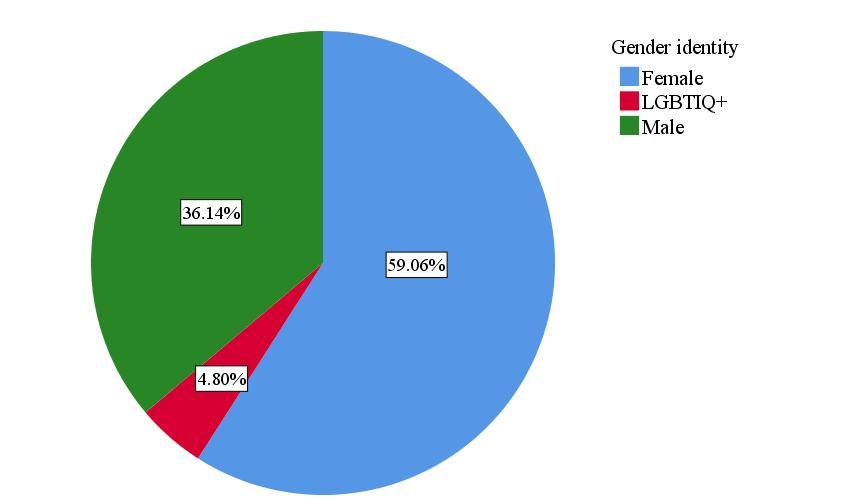
A total of 19,151 undergraduates participated. Regarding self-reported gender identity, 59.0% identified as female (n = 11,316), 36.1% as male (n = 6,914), and 4.8% as LGBTIQ+ (n = 921). Most respondents reported being single (n = 18,397), with fewer in cohabitation (n = 446) or formally married (n = 308) (Table 3). These distributions describe a predominantly single, female-leaning sample with a non-trivial proportion of LGBTIQ+ students.(see Figure 1).
Bivariate tests indicated that family coexistence quality was associated with perceived familial affection (χ² = 91.051, df = 1, p < .001). Among those reporting good coexistence, 58.8% also reported always feeling loved, whereas lower levels of coexistence coincided with higher reports of never/sometimes feeling loved (Table 6). In simple cross-tabs, sex showed a statistically significant but very small association with feeling loved, χ²(3) = 21.46, p < .001, Cramér’s V = .033 (N = 19,115), suggesting minimal practical differences by sex in the raw distribution.
Ordinal logistic regression treating “Do you feel like they love you?” as an ordered outcome showed adequate fit (Pearson χ²(247) = 271.11, p = .140; Deviance χ²(247) = 235.99, p = .682) and supported the proportional-odds assumption (test of parallel lines: χ²(4) = 7.586, p = .108). Using women as the reference and adjusting for age, men had lower cumulative odds of being in higher categories of feeling loved (B = −0.152, SE = 0.035, p < .001; OR = 0.86, 95% CI [0.80, 0.92]); age was not associated with the outcome (B = −0.004, p = .428). For perceived interpersonal appreciation, a four-level indicator, the association with gender identity was statistically significant (χ² = 121.658, df = 6, p < .001); descriptively, LGBTIQ+ students were less likely to endorse “strongly agree” relative to women and men (Table 8). Across outcomes, effect sizes were small, consistent with large-N sensitivity, but the pattern was coherent with lower perceived affection and appreciation among LGBTIQ+ students
Figure 1
Self-reported gender identity
Regarding marital status, most participants reported being single (n = 18,397), with a smaller proportion in cohabitation (n = 446) compared to those formally married (n = 308). When comparing marriage with the common-law union, the preference for cohabitation is observed, this may be due to cultural change, lack of commitment, and responsibility towards marriage. (See Table 3). This finding suggests potential cultural shifts and differing attitudes toward traditional marriage and less formal relationships, highlighting the need for further exploration of how these dynamics intersect gender roles, identity, and emotional well-being. (see Table 3)
Table 3.
Gender Identity | Single | Married | Cohabitation | Total |
Male | 6,689 | 96 | 129 | 6,914 |
Female | 10,837 | 207 | 272 | 11,316 |
LGBTIQ+ | 871 | 5 | 45 | 921 |
Total | 18,397 | 308 | 446 | 19,151 |
Note: Own elaboration
Table 4
Association between Sex and Gender Identity
What is your sex? | What is your gender identity? | |
Pearson Correlation | 1 | .809** |
Sig. (2-tailed) | .000 | |
N | 19151 | 19151 |
Pearson Correlation | .809** | 1 |
Sig. (2-tailed) | .000 | |
N | 19151 | 19151 |
Note. Pearson product–moment correlations between the binary item “What is your sex?” and the multi-category “What is your gender identity?”. p values are two-tailed. Source: Authors, REVIVA 2022.limi
Chi-square analyses revealed significant associations between family coexistence quality and perceived familial affection (χ² = 91.051, df = 1, p < .001; Cramér’s V = .07, small). Cross-tabulation showed that among students reporting good family coexistence, the majority felt consistently loved (58.8%). However, disparities emerged, notably among LGBTIQ+ participants, who reported higher levels of poor coexistence and lower perceived familial affection compared to other groups (Table 5 and 6).
Table 5
Chi-square Between Family Coexistence and Feeling Loved
Chi-square Test | Value | df | Sig. (2-tailed) |
Pearson χ² | 91.051 | 1 | .000 |
Note: Own elaboration
Table 6
Cross-tabulation Between Family Coexistence and Feeling Loved by Gender Identity
How has living with your family been? | Do you feel like they love you? | Male | Female | LGBTIQ+ | Total | % |
Good | Never | 42 | 46 | 3 | 91 | 0.48 |
Sometimes | 202 | 383 | 36 | 621 | 3.24 | |
Always | 4258 | 6647 | 347 | 11252 | 58.77 | |
Bad | Never | 73 | 124 | 37 | 234 | 1.22 |
Sometimes | 88 | 143 | 23 | 254 | 1.33 | |
Always | 30 | 54 | 6 | 90 | 0.47 | |
Average | Never | 94 | 169 | 35 | 298 | 1.56 |
Sometimes | 980 | 1718 | 264 | 2962 | 15.47 | |
Always | 1147 | 2032 | 170 | 3349 | 17.49 | |
Total | 6914 | 11316 | 921 | 19151 | 100.00 |
Source: Authors, data from REVIVA 2022 instrument
In bivariate analyses, sex was associated with the perception of feeling loved, χ²(3) = 21.46, p < .001, with a Cramér’s V = 0.033 (N = 19,115), indicating a very small effect in the context of the large sample. Although statistically significant, the magnitude suggests minimal practical differences across sex categories in the raw cross-tabulations.
In the ordinal logit model for the four-level outcome “Do you feel loved?”, overall fit was adequate (Pearson χ²(247) = 271.11, p = .140; Deviance χ²(247) = 235.99, p = .682). The test of parallel lines was not significant (χ²(4) = 7.586, p = .108), supporting the proportional-odds assumption. Using women as the reference category and adjusting for age, men showed B = −0.152 (SE = 0.035, p < .001), yielding a cumulative OR = 0.86 with 95% CI 0.80–0.92. This indicates lower odds of being in higher categories of feeling loved among men relative to women. Age was not associated with the outcome (B = −0.004, p = .428). Model diagnostics supported proportional odds and adequate fit; cumulative odds ratios enable a clear interpretation across ordered thresholds.
In a parallel ordinal logistic model with “Do you feel loved?” as the outcome and gender identity as the focal predictor (female reference), LGBTIQ+ students showed lower cumulative odds relative to women (OR≈0.85–0.90), whereas men were closer to women; model fit and proportional-odds assumptions were acceptable
On perceived interpersonal appreciation, significant differences were found based on gender identity (χ² = 121.658, df = 6, p < .001; Cramér’s V ≈ .08, small). Given the large sample, the association’s magnitude was small, yet the cross-tabulation (Table 8) shows a consistent pattern of lower ‘Strongly agree’ in the LGBTIQ+ group compared with women and men. While a substantial majority of female students (62.1%) felt strongly appreciated by others, only 3.8% of LGBTIQ+ students reported the same, highlighting significant emotional vulnerability within this group (Tables 7 and 8)
Table 7
Chi-square Between Gender Identity and Perception of Appreciation
Test | Value | df | Sig. (2-tailed) |
Pearson χ² | 121.658 | 6 | 0.000 |
Likelihood Ratio | 111.297 | 6 | 0.000 |
Linear-by-Linear | 0.004 | 1 | 0.947 |
N | 19151 |
Note: Own elaboration
Table 8
Perception of Interpersonal Appreciation by Gender Identity
Appreciation Level | Male | % Male | Female | % Female | LGBTIQ+ | % LGBTIQ+ | Total |
Strongly disagree | 203 | 33.77 | 338 | 56.23 | 60 | 9.98 | 601 |
Disagree | 547 | 39.32 | 737 | 52.98 | 107 | 7.69 | 1391 |
Agree | 3266 | 37.72 | 4965 | 57.34 | 427 | 4.93 | 8658 |
Strongly agree | 2898 | 34.09 | 5276 | 62.06 | 327 | 3.84 | 8501 |
Note: Own elaboration
While several associations reached statistical significance, effect sizes were small (e.g., Cramér’s V ≈ .03 for sex differences in feeling loved), consistent with the large sample. Importantly, results from the ordinal model—which preserves the ordered nature of the outcome—converged with the bivariate findings and provide adjusted estimates with clearer interpretability (cumulative ORs).
Importantly for university policy, family support—more than peer support—has been linked to fewer perceived academic difficulties among LGBTIQ+ university students during disruptive contexts. This aligns with our focus on family coexistence and affection as practical strategies for student success, supplementing campus-based inclusion efforts with family-involved approaches. [26]
Limitations
Although the study boasts a robust sample size, limitations include reliance on self-reported data, potentially influenced by social desirability biases, emotional states, and cultural contexts, which may affect response accuracy. Additionally, the cross-sectional nature of the data limits causal interpretations. Further research incorporating longitudinal designs or mixed methodologies could offer deeper insights. Outcomes relied on single items, which, while interpretable, limit construct breadth; mixed-methods and validated multi-item family-support scales would strengthen future work. We did not conduct qualitative validation or member-checking. Potential regional and institutional imbalances were not recorded, precluding weighted inference.
Discussion
The findings highlight the critical role of family relationships and perceived familial affection in shaping university students' emotional well-being and gender identity. Positive family coexistence and perceived affection significantly enhance self-esteem and resilience during the challenging transition to university life.
As human beings, we will always interact and form groups, especially primary and secondary ones. In this sense, we must recognize the importance of family functionality and the perception of the relationship with the family that the university student has. [27] This sense of being loved and respected within the family or their primary group is a critical part of the emotional well-being and self-esteem of university students. This family appreciation facilitates the sense of family belonging, which can be essential during a stage of transition and challenges such as university life, and even more so if the student has to leave his or her home and family to go to study at university in another country, state or municipality.
University students often face academic, social, and personal pressures. Knowing that they have a family unit that offers unconditional support—even from afar—can help reduce the stress and anxiety related to the changes they experience at the start of their university journey. This emotional support serves as a buffer against hardships, enabling students to feel more confident and capable of handling the challenges ahead.
When students feel recognized and valued in their home environment, they develop a positive view of themselves. High self-esteem is linked to better academic results, greater personal satisfaction, and better overall mental health.[28] Feeling appreciated by your family strengthens your confidence in your skills and competencies, which can lead to more effective performance in the academic and social spheres.
Family connection also provides a sense of belonging, which is essential during the transition to university, a stage when students may feel isolated or unsafe. Having strong family support and feeling valued within that structure helps mitigate feelings of loneliness and alienation, facilitating a more fluid adaptation to the new university environment. This family support can be the foundation that allows them to face university challenges with greater resilience and confidence.[29]
The significant association between gender identity and perceived familial appreciation points to broader patterns of differentiated emotional support among social groups. This supports the conclusion that systemic and structural factors, including family acceptance, are unevenly distributed and may significantly influence the emotional development and well-being of gender-diverse individuals.19
Our pattern—lower perceived affection/appreciation among LGBTIQ+ students with small but consistent effects—fits family–ecological views in which proximal family dynamics are pivotal for identity development. It also converges with broader international evidence showing that supportive family environments buffer stress and improve adjustment among gender-diverse youth, suggesting that even modest shifts in familial support may translate into meaningful gains in students’ well-being and functioning.27
Lower perceived affection and appreciation among LGBTIQ+ students align with qualitative findings where transgender youth highlight that “support' involves more than just family presence. It includes specific actions such as explicitly recognizing their identity, using correct names and pronouns, advocating in schools, and providing everyday practical help. When these actions are absent or only conditional, support appears fragile and stressful.[30] This alignment indicates that small behavioral changes, like following social-name protocols and maintaining respectful communication routines, can significantly enhance well-being, consistent with ecological and minority-stress models.
Analyzing through minority stress and family–ecological perspectives, our consistent small disparities for LGBTIQ+ students likely result from the combined effects of distal stigma and nearby family interactions. Previous research indicates that caregiver actions such as affirming names and pronouns, clear validation, and active advocacy lead to better student adjustment, while “conditional acceptance” decreases perceived support.27 Our study expands this to a large Mexican university, showing that even slight improvements in everyday family communication can lead to noticeable increases in feelings of love and appreciation.
Mechanistically, recent clinical and population data indicate that parental support attenuates risk gradients in mental health for LGBTIQ+ adolescents and young people—moderating depressive symptoms and suicidality in large primary-care samples. Although our outcomes focus on perceived affection and appreciation rather than clinical endpoints, the directional consistency reinforces the interpretation of family support as a proximal protective factor in tertiary-education settings.
The perception of feeling loved by the family and the gender identity of the university student are deeply interconnected and must be considered, as they serve as emotional and well-being support. This helps foster resilience and self-esteem, enabling students to feel safe and validated in their self-perception. Gender identity is intertwined with family relationships, cultural expectations, and social norms. The perception of feeling loved by family and the university student's gender identity are inherently linked. Recognizing this connection allows us to better address the emotional, psychological, and social needs of students, promoting holistic development and a more positive and enriching university experience.
Overall, fostering supportive family dynamics emerges as a key factor for enhancing the psychological health and academic success of university students, particularly in contexts of gender diversity and inclusion.
Although several associations reached statistical significance, the effect sizes were small, which aligns with the large sample size and indicates that the observed differences, while systematic, are modest in practical impact. The cross-sectional, non-probabilistic design provides diagnostic and policy insights but limits causal inference and population generalizability. Self-report data may be influenced by social desirability. Future research should include probabilistic sampling and longitudinal designs.
Bibliografía
Andrzejewski, Jacqueline, Sanjana Pampati, Rebecca J. Steiner, Lisa Boyce, and Michelle M. Johns. Perspectives of Transgender Youth on Parental Support: Qualitative Findings from the Resilience and Transgender Youth Study. Health Education & Behavior 48, no. 1 (2020): 74–81. https://doi.org/10.1177/1090198120965504.
Arenas, J. The Influence of the Family on the Construction of Gender Identity during the University Stage. Journal of Social Psychology 20, no. 3 (2022): 45–60.
Arora, M., Damien W. Riggs, Sabra L. Katz-Wise, Sam Skelton, Philip A. Schmitt, and Annie Pullen Sansfaçon. Navigating Normative Narratives: Understanding Familial Communicative Behaviors and Practices about Trans Young People's Embodiment. Journal of Gender Studies (2025). https://doi.org/10.1080/27703371.2025.2483742.
Consejo Nacional para Prevenir la Discriminación (CONAPRED). Encuesta sobre discriminación por motivos de orientación sexual e identidad de género 2018. Ciudad de México: CONAPRED, 2019.
DelFerro, Jennifer, Jennifer Whelihan, Jillian Min, Maya Powell, Gabriela DiFiore, Ari Gzesh, Sarah Jelinek, Karen Davis, Joanna D. Jones, Alexander G. Fiks, Brita P. Jenssen, and Stephanie Wood. The Role of Family Support in Moderating Mental Health Outcomes for LGBTQ+ Youth in Primary Care. JAMA Pediatrics 178, no. 9 (2024): 914. https://doi.org/10.1001/jamapediatrics.2024.1956.
Erazo-Gómez, Andrés, Hugo Martínez-Carrillo, and Luis A. Palta-Calambas. Entre la invisibilidad y la libertad: Construir paz desde organizaciones LGBT en el norte del Cauca. Revista CS, no. 41 (2023): a02. https://doi.org/10.18046/recs.i41.02.
European Union Agency for Fundamental Rights. LGBTIQ Equality at a Crossroads: Progress and Challenges. Luxembourg: European Union, 2024. https://fra.europa.eu/en/publication/2024/lgbtiq-equality-crossroads-progress-and-challenges.
Facio, Alda. Cuando el género suena, cambios trae. San José: ILANUD / Proyecto Mujer, Justicia y Género, 1992.
García, M. Family Dynamics and Expression of Gender Identity in University Students. Journal of Family Studies 15, no. 2 (2021): 210–225.
Gayet, Cecilia, and Juan C. Mendoza-Pérez. Self-Esteem of Adolescent Males Who Have Sex with Other Males and Its Association with Family Violence in Childhood. In Nuevas rutas y evidencias en estudios sobre violencia y sexualidad de adolescentes mexicanos, edited by Irene Casique, 1–18. Ciudad de México: Universidad Nacional Autónoma de México, 2019.
Guzmán, Luis. Los derechos humanos en la enseñanza del trabajo social. San José: Instituto Interamericano de Derechos Humanos, 1992.
Lopez, A. Impact of Family Coexistence on the Gender Identity of Young University Students. Journal of Family Studies 18, no. 1 (2023): 78–92.
Lozano-Verduzco, Iván, José Vega-Cauich, Juan C. Mendoza-Pérez, and Shelley L. Craig. Perceived Social Support and Mental Health Indicators of a Mexican LGBT Sample during the COVID-19 Pandemic. International Journal of Mental Health and Addiction 21 (2023). https://doi.org/10.1007/s11469-023-01064-4.
Martínez, E., P. Rodríguez, and L. González. Family Support and Emotional Well-Being in LGBTQ+ College Students. Journal of LGBT Youth 30, no. 4 (2024): 510–525.
Meyer, I. H. Prejudice, Social Stress, and Mental Health in Lesbian, Gay, and Bisexual Populations: Conceptual Issues and Research Evidence. Psychological Bulletin 129, no. 5 (2003): 674–697. https://doi.org/10.1037/0033-2909.129.5.674.
Muñiz, A., and S. Flores. Igualdad sustantiva: Retos y perspectivas. Ciudad de México: Comisión Nacional de los Derechos Humanos, 2018.
Mu, Yiqing. The Role of Family Education in Shaping Gender Roles: Insights from Empirical Case Studies. International Journal of Education and Humanities 18, no. 1 (2025): 200–203. https://doi.org/10.54097/xvb3a389.
Özdoğru, Arzu Aysun. Bronfenbrenner's Ecological Theory. In Encyclopedia of Child Behavior and Development, 300–301. New York: Springer, 2011. https://doi.org/10.1007/978-0-387-79061-9_940.
Pick, Susan, Carolina Contreras, and Antonio Barker-Aguilar. Violence against Women in Mexico. Annals of the New York Academy of Sciences 1087, no. 1 (2006): 261–278. https://doi.org/10.1196/annals.1385.014.
Ryan, Claire, David Huebner, Rafael M. Diaz, and Juan Sanchez. Family Rejection as a Predictor of Negative Health Outcomes in White and Latino Lesbian, Gay, and Bisexual Young Adults. PEDIATRICS 123, no. 1 (2008): 346–352. https://doi.org/10.1542/peds.2007-3524.
Sánchez, R. Influence of Family Support on the Psychosocial Vulnerability of LGBTQ+ College Students. Journal of Mental Health Research 12, no. 3 (2022): 150–165.
Scott, Joan. Gender: A Useful Category for Analysis. Op. Cit.: Revista del Centro de Investigaciones Históricas, no. 14 (2002): 9–45. https://revistas.upr.edu/index.php/opcit/article/view/16994.
United Nations. Agenda 2030 para el desarrollo sostenible. New York: United Nations, 2015. https://www.un.org/sustainabledevelopment/es/2015/09/la-asamblea-general-adopta-la-agenda-2030-para-el-desarrollo-sostenible/.
United Nations. Informe de los Objetivos de Desarrollo Sostenible 2023: Una edición especial para un plan de rescate de las personas y el planeta. New York: United Nations, 2023. https://unstats.un.org/sdgs/report/2023/The-Sustainable-Development-Goals-Report-2023_Spanish.pdf.
Westwater, Jason J., Elizabeth A. Riley, and Gregory M. Peterson. What about the Family in Youth Gender Diversity? A Literature Review. International Journal of Transgenderism 20, no. 4 (2019): 351–370. https://doi.org/10.1080/15532739.2019.1652130.
Zhang, Y., M. R. Garcia, and Eva S. Lefkowitz. How Social Support and Parent–Child Relationships Related to LGBTQ+ College Students' Academic Challenges During COVID-19. International Journal of Environmental Research and Public Health 22, no. 3 (2025): 459. https://doi.org/10.3390/ijerph22030459.
Las opiniones, análisis y conclusiones del autor son de su responsabilidad y no necesariamente reflejan el pensamiento de la Revista Inclusiones. | |
[1] Arenas, J. “The Influence of the Family on the Construction of Gender Identity during the University Stage.” Journal of Social Psychology 20, no. 3 (2022): 45–60.
[2] Lopez, A. “Impact of Family Coexistence on the Gender Identity of Young University Students.” Journal of Family Studies 18, no. 1 (2023): 78–92.
[3] García, M. “Family Dynamics and Expression of Gender Identity in University Students.” Journal of Family Studies 15, no. 2 (2021): 210–225.
[4] Martínez, E., P. Rodríguez, and L. González. “Family Support and Emotional Well-Being in LGBTQ+ College Students.” Journal of LGBT Youth 30, no. 4 (2024): 510–525.
[5] Sánchez, R. “Influence of Family Support on the Psychosocial Vulnerability of LGBTQ+ College Students.” Journal of Mental Health Research 12, no. 3 (2022): 150–165.
[6] Council to Prevent Discrimination (CONAPRED). Encuesta sobre discriminación por motivos de orientación sexual e identidad de género 2018. Ciudad de México: CONAPRED, 2019. https://buff.ly/2OXAhbl
[7] European Union Agency for Fundamental Rights. (2024, May 14). LGBTIQ equality at a crossroads: Progress and challenges. https://fra.europa.eu/en/publication/2024/lgbtiq-equality-crossroads-progress-and-challenges
[8] Meyer, I. H. (2003). Prejudice, social stress, and mental health in lesbian, gay, and bisexual populations: Conceptual issues and research evidence. Psychological Bulletin, 129(5), 674–697. https://doi.org/10.1037/0033-2909.129.5.674
[9] Ryan, C., Huebner, D., Diaz, R. M., & Sanchez, J. (2008). Family Rejection as a Predictor of Negative Health Outcomes in White and Latino Lesbian, Gay, and Bisexual Young Adults. PEDIATRICS, 123(1), 346–352. https://doi.org/10.1542/peds.2007-3524
[10] Organization of American States. Agenda 2030 para el desarrollo sostenible. Washington, DC: Organization of American States, 2015.https://www.un.org/sustainabledevelopment/es/2015/09/la-asamblea-general-adopta-la-agenda-2030-para-el-desarrollo-sostenible/.
[11] Westwater, J. J., Riley, E. A., & Peterson, G. M. (2019). What about the family in youth gender diversity? A literature review. International Journal of Transgenderism, 20(4), 351–370.https://doi.org/10.1080/15532739.2019.1652130
[12] Council to Prevent Discrimination (CONAPRED). Encuesta sobre discriminación por motivos de orientación sexual e identidad de género 2018. Ciudad de México: CONAPRED, 2019. https://buff.ly/2OXAhbl.
[13] Westwater, J. J., Riley, E. A., & Peterson, G. M. (2019). What about the family in youth gender diversity? A literature review. International Journal of Transgenderism, 20(4), 351–370. https://doi.org/10.1080/15532739.2019.1652130
[14] Facio, Alda. Cuando el género suena, cambios trae. San José: ILANUD / Proyecto Mujer, Justicia y Género, 1992.
[15] Westwater, Jason J., Elizabeth A. Riley, and Gregory M. Peterson. “What about the Family in Youth Gender Diversity? A Literature Review.” International Journal of Transgenderism 20, no. 4 (2019): 351–370. https://doi.org/10.1080/15532739.2019.1652130.
[16] Pick, Susan, Carolina Contreras, and Antonio Barker-Aguilar. “Violence against Women in Mexico.” Annals of the New York Academy of Sciences 1087, no. 1 (2006): 261–278. https://doi.org/10.1196/annals.1385.014.
[17] Westwater, J. J., Riley, E. A., & Peterson, G. M. (2019). What about the family in youth gender diversity? A literature review. International Journal of Transgenderism, 20(4), 351–370. https://doi.org/10.1080/15532739.2019.1652130
[18] Muñiz, A., and S. Flores. Igualdad sustantiva: Retos y perspectivas. Ciudad de México: Comisión Nacional de los Derechos Humanos, 2018.
[19] Scott, Joan. “Gender: A Useful Category for Analysis.” Op. Cit.: Revista del Centro de Investigaciones Históricas 14 (2002): 9–45. https://revistas.upr.edu/index.php/opcit/article/view/16994.
[20] DelFerro, J., Whelihan, J., Min, J., Powell, M., DiFiore, G., Ari Gzesh, Jelinek, S., Karen, Davis, M., Jones, J. D., Fiks, A. G., Jenssen, B. P., & Wood, S. (2024). The Role of Family Support in Moderating Mental Health Outcomes for LGBTQ+ Youth in Primary Care. JAMA Pediatrics, 178(9), 914–914. https://doi.org/10.1001/jamapediatrics.2024.1956
[21] Erazo-Gómez, Andrés, Hugo Martínez-Carrillo, and Luis A. Palta-Calambas. “Entre la invisibilidad y la libertad: Construir paz desde organizaciones LGBT en el norte del Cauca.” Revista CS 41 (2023): a02. https://doi.org/10.18046/recs.i41.02.
[22] Lozano-Verduzco, Iván, José Vega-Cauich, Juan C. Mendoza-Pérez, and Shelley L. Craig. “Perceived Social Support and Mental Health Indicators of a Mexican LGBT Sample during the COVID-19 Pandemic.” International Journal of Mental Health and Addiction, advance online publication (2023). https://doi.org/10.1007/s11469-023-01064-4.
[23] Mu, Yiqing. “The Role of Family Education in Shaping Gender Roles: Insights from Empirical Case Studies.” International Journal of Education and Humanities 18, no. 1 (2025): 200–203. https://doi.org/10.54097/xvb3a389.
[24]Arora, M., Damien W. Riggs, Sabra L. Katz-Wise, Sam Skelton, Philip A. Schmitt, and Annie Pullen Sansfaçon. “Navigating Normative Narratives: Understanding Familial Communicative Behaviors and Practices about Trans Young People’s Embodiment.” Journal of Gender Studies, advance online publication (2025). https://doi.org/10.1080/27703371.2025.2483742.
[25]Gayet, Cecilia, and Juan C. Mendoza-Pérez. “Self-Esteem of Adolescent Males Who Have Sex with Other Males and Its Association with Family Violence in Childhood.” In Nuevas rutas y evidencias en estudios sobre violencia y sexualidad de adolescentes mexicanos, edited by Irene Casique, 1–18. Ciudad de México: Universidad Nacional Autónoma de México, 2019.
[26]Zhang, Y., Garcia, M. R., & Lefkowitz, Eva. S. (2025). How Social Support and Parent–Child Relationships Related to LGBTQ+ College Students’ Academic Challenges During COVID-19. International Journal of Environmental Research and Public Health, 22(3), 459. https://doi.org/10.3390/ijerph22030459
[27]Özdoğru, A. A. (2011). Bronfenbrenner’s Ecological Theory. Encyclopedia of Child Behavior and Development, 300–301. https://doi.org/10.1007/978-0-387-79061-9_940.
[28]Lozano-Verduzco, Iván, José Vega-Cauich, Juan C. Mendoza-Pérez, and Shelley L. Craig. “Perceived Social Support and Mental Health Indicators of a Mexican LGBT Sample during the COVID-19 Pandemic.” International Journal of Mental Health and Addiction, advance online publication (2023). https://doi.org/10.1007/s11469-023-01064-4.
[29] Guzmán, Luis. Los derechos humanos en la enseñanza del trabajo social. San José: Instituto Interamericano de Derechos Humanos, 1992.
[30] United Nations. Informe de los Objetivos de Desarrollo Sostenible 2023: Una edición especial para un plan de rescate de las personas y el planeta. New York: United Nations, 2023. https://unstats.un.org/sdgs/report/2023/The-Sustainable-Development-Goals-Report-2023_Spanish.pdf